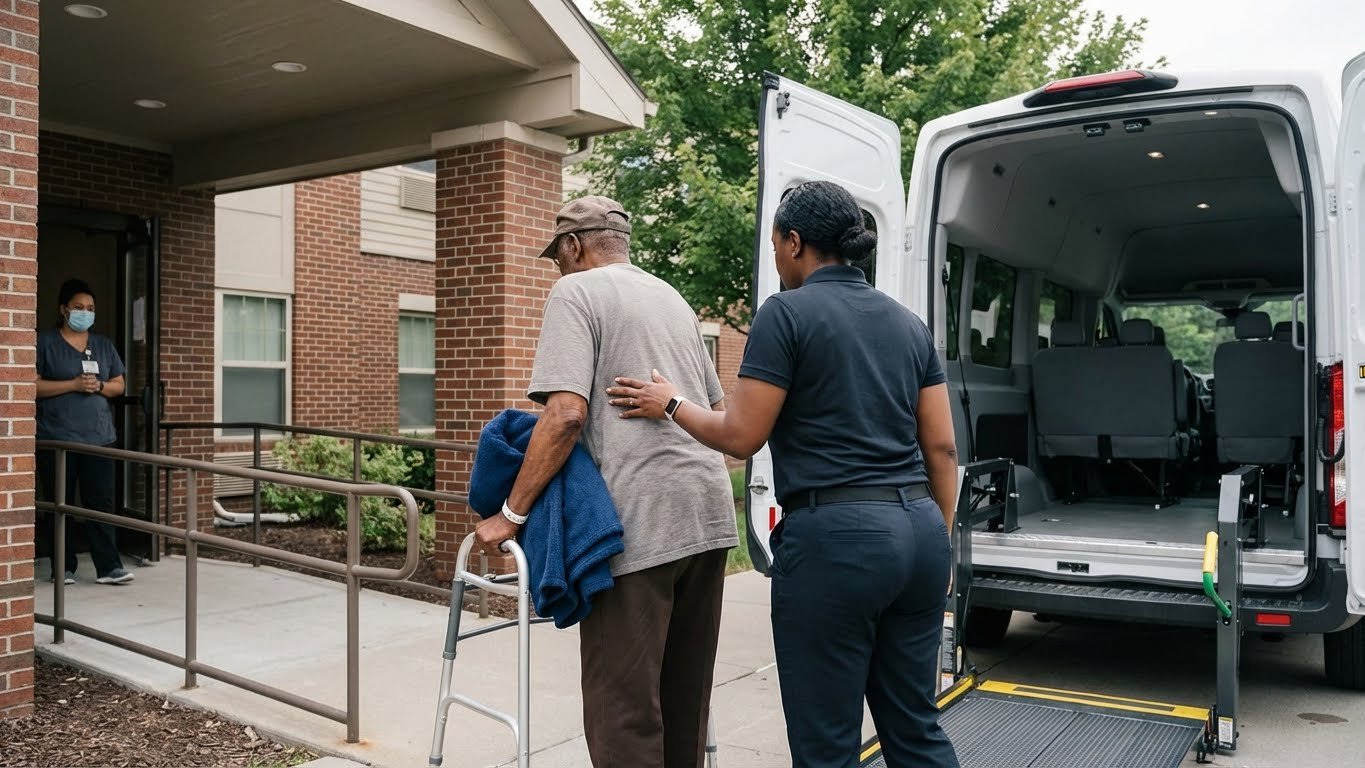
When arranging wheelchair transportation for medical appointments, patients and caregivers are often presented with two service options: door-to-door and curb-to-curb transportation. While these terms may sound similar, the level of assistance provided can significantly impact patient safety, comfort, and overall experience. Understanding the difference between the two is essential when choosing medical transportation that truly meets a patient’s needs.
Assure Rides specializes in wheelchair-accessible non-emergency medical transportation designed to prioritize safety, dignity, and peace of mind. Knowing which service is right can help patients arrive at appointments feeling supported rather than stressed.
What Is Curb-to-Curb Wheelchair Transportation?
Curb-to-curb service involves picking up and dropping off a passenger at the curb outside their home or medical facility. The driver assists with vehicle entry and exit but does not provide help beyond that point. Once the passenger is outside the vehicle, they are expected to navigate the remaining distance independently.
For individuals with high levels of mobility and confidence, curb-to-curb transportation may be sufficient. However, many medical patients face challenges that make this level of service unsafe or impractical.
What Is Door-to-Door Wheelchair Transportation?
Door-to-door wheelchair transportation includes assistance from the patient’s residence into the vehicle and from the vehicle into the medical facility. This service ensures patients are not left to navigate obstacles such as uneven sidewalks, parking lots, ramps, or long hallways on their own.
Door-to-door transportation is especially beneficial for individuals who experience fatigue, balance issues, or limited mobility, providing a smoother and safer transition throughout the journey.
Why Door-to-Door Service Is Safer for Medical Appointments
Medical appointments often involve physical strain, emotional stress, or time sensitivity. Patients may already feel anxious or fatigued before their visit. Requiring them to manage long distances or difficult terrain alone increases the risk of falls or injury.
Door-to-door wheelchair transportation reduces these risks by:
- Providing physical assistance during transitions
- Minimizing walking or self-propelling distances
- Offering reassurance and guidance
- Ensuring safe entry and exit at both locations
This level of care allows patients to arrive at appointments feeling calmer and more prepared.
Who Should Avoid Curb-to-Curb Transportation?
Curb-to-curb service may not be appropriate for:
- Seniors with balance or coordination issues
- Wheelchair users with limited upper-body strength
- Post-surgical patients
- Individuals managing chronic pain or fatigue
- Patients unfamiliar with medical facility layouts
For these individuals, navigating the final stretch of the journey alone can be physically taxing and potentially dangerous.
The Impact on Caregivers and Families
Caregivers often play a key role in coordinating transportation. Door-to-door service reduces caregiver burden by eliminating the need to accompany patients just to ensure safe entry and exit. Families gain peace of mind knowing their loved one is supported from start to finish.
Door-to-door transportation allows caregivers to trust that professional assistance is provided at every stage, reducing stress and scheduling conflicts.
Why Door-to-Door Service Improves Appointment Outcomes
Transportation quality directly affects healthcare access. Patients who struggle to reach appointments are more likely to arrive late, feel overwhelmed, or skip visits entirely.
Door-to-door service supports:
- On-time arrival
- Reduced pre-appointment fatigue
- Lower anxiety levels
- Greater appointment attendance
Reliable transportation helps patients focus on their health rather than the logistics of travel.
How Assure Rides Delivers Door-to-Door Wheelchair Transportation
Assure Rides approaches wheelchair transportation with a patient-first philosophy. Drivers are trained to assist respectfully, communicate clearly, and remain attentive to individual needs. Vehicles are maintained to ensure comfort and stability throughout the ride.
Each trip is planned with care, ensuring the appropriate level of assistance is provided based on the passenger’s mobility and comfort requirements.
Choosing the Right Service for Your Needs
When deciding between door-to-door and curb-to-curb service, consider the patient’s physical abilities, appointment type, and environment. If there is any uncertainty about navigating entrances or maintaining balance, door-to-door transportation is the safer option.
Choosing a service that prioritizes safety and dignity ensures a more positive medical experience.
Why Assure Rides Recommends Door-to-Door Support
Assure Rides recognizes that wheelchair transportation is not just about travel—it is about access to healthcare. Door-to-door support aligns with this mission by reducing risk and ensuring patients feel cared for every step of the way.
The goal is to remove transportation as a barrier, not introduce new challenges.
Conclusion
While curb-to-curb wheelchair transportation may work for some individuals, door-to-door service offers a higher level of safety, comfort, and peace of mind—especially for medical travel. For patients with mobility challenges, fatigue, or balance concerns, door-to-door transportation is often the best choice.
Assure Rides provides wheelchair transportation services designed to support patients with dignity and reliability. By offering door-to-door assistance, Assure Rides ensures medical travel feels safe, supportive, and stress-free from start to finish.